
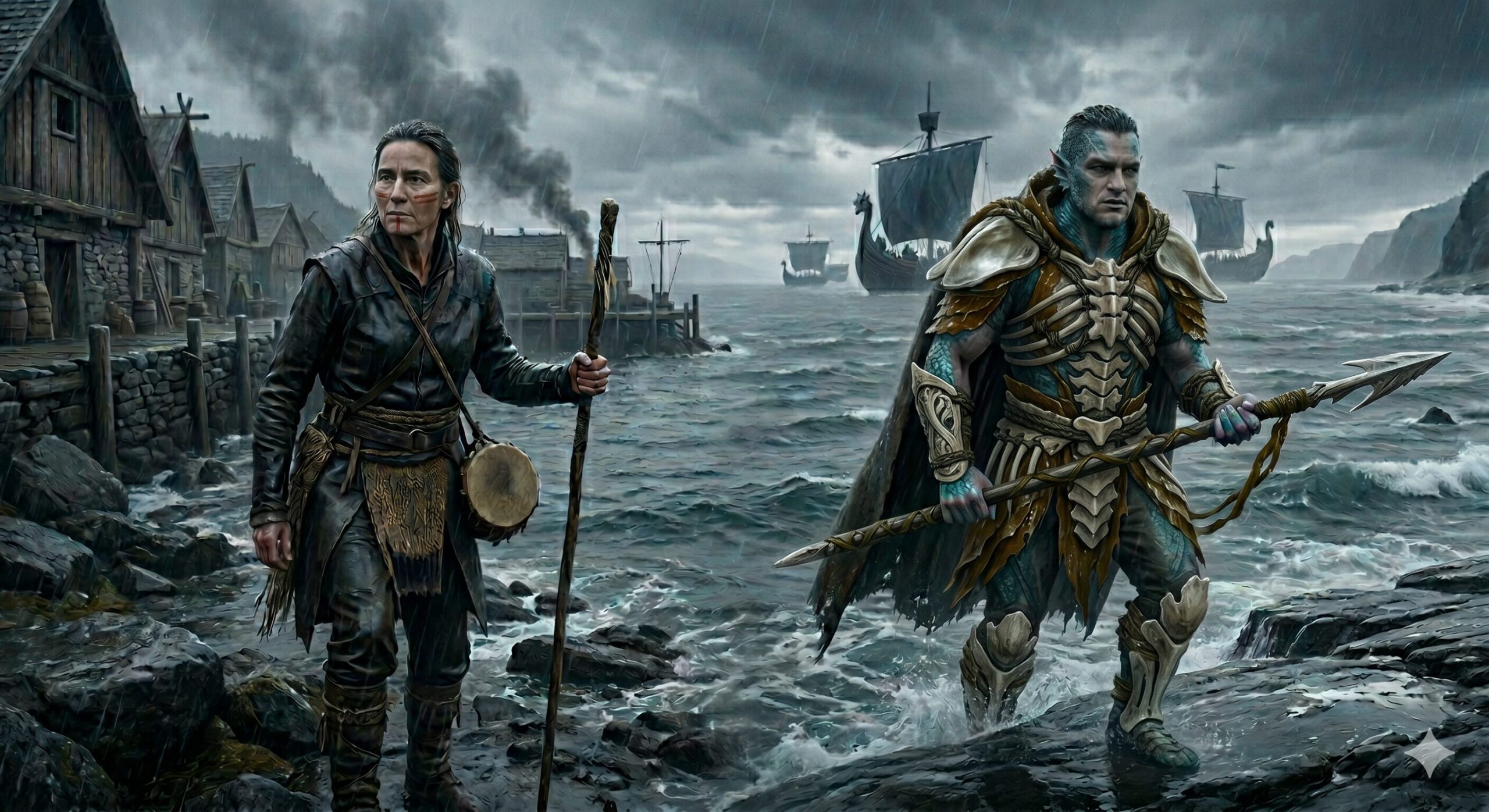
Sovereigns of the sea-spray, the grey mists, and the deep forests.
These factions populate the primary lifelines of travel, regional distribution, and resource extraction across the vast, internal waters of the Zaleeshee. Bound together by The Pact-an ancient, blood-sealed territorial covenant designed to withstand the eternal hunger of the Nosvartus, these marine societies are fundamentally split by their visual identities, environmental adaptations, and distinct physical biology.
The Cres Tribe: Wardens of the Shallows
The Cres hold complete territorial authority over the inner shallows, shallow bays, and the immediate shorelines of the Zaleeshee. Their culture balances heavy communal isolation with tactical necessity.
- The Inks of Lineage: During a coming-of-age ritual at 9 years old, every Cres tribal member receives a sequence of horizontal facial stripes of uniform length tattooed directly across the cheekbones. These markings serve as a permanent, visible index of their specific bloodline heritage.
- The Banded Lineage: Cres society is strictly cataloged by solid horizontal facial stripes applied during a coming-of-age ritual at 9 years old and updated throughout life. The color indicates specific family guilds and practical roles:
- Red: Hunters (Trackers and martial defenders)
- Blue: Fishers (Maritime and lake specialists)
- Green: Gatherers (Foragers, herbalists, and botanists)
- Yellow: Craftsmen (Toolmakers, carvers, and weavers)
- Purple: Healers (Keepers of medicinal remedies)
- Orange: Scouts (Pathfinders and long-range lookouts)
- The Mark of Transgression: Black bands are used exclusively as a punitive brand for tribal lawbreakers and transgressors who have violated tribal custom, marking their permanent shame.
- The Lake Crescent Vigil: A solitary coming-of-age circumambulation around the shores of Lake Crescent required of all adolescents at age nine to earn their initial guild tattoo.
- The Mourning Taboo: A strict prohibition against naming the dead until their death has been formally named or reported to the camp or the tribe. Until this reporting occurs, the deceased may only be referred to through indirect language or silence. During travel, this taboo is absolute even in active crisis-after a death on the road, no one speaks the dead’s name or acknowledges the loss aloud until the party has returned to camp or tribal territory.
- The Pact Integrity: A deep, near-religious reverence for The Pact-the ancient, blood-sealed territorial boundaries established historically with all of the tribes, including high-intelligence Nosvartus enclaves.
- Habits and Settlement: Anchored within their permanent harbor stronghold of Kla-um—a coastal village of stone and weathered timber characterized by the heavy smell of woodsmoke and roasting fish and venison—the Cres move through the dense brush with an absolute economy of motion. In times of tactical crisis, warriors coat their skin entirely in charcoal to launch pitch-black, torchless ambushes against the predatory Little Eyes.
- Speech and Sound: Their language derives from a deeply altered branch of Town Common, transformed over centuries into a complex symphony of tonal variations and sharp phonetic clicks that directly mimic local wildlife calls. Their dialogue carries a rhythmic cadence punctuated by these natural animal-mimicking clicks.
The Salsh Tribe: Sovereigns of the Deep
The Salsh are a peaceful, seafaring culture whose history and existence are biologically tied to the open pelagic shelves and to the orcas and great whales.
- Semi-Amphibious Physiology: The Salsh are fundamentally human, but they possess localized semi-amphibious adaptations chiseled by a lifetime spent beneath the waves. This biology features subtle, glistening blue-green scales tracing the skin along their wrists and neck, delicate webbing between the digits of their hands and feet, and faint, narrow gill structures along the collarbones of certain bloodlines.
- The Constraint of Air: With human respiratory tracts, the Salsh cannot survive submerged indefinitely. They can remain underwater for extended periods navigating the deep channels, but they ultimately require oxygen and must surface regularly to fill their lungs.
- Nautical Adornments and Masking: The Salsh refuse to apply permanent skin inks to their bodies. Instead, for battle array or deep-sea rites, they paint temporary wave-like geometric patterns across their skin using deep-sea abyssal silt. Their hunters wear heavy whalebone-plate armor.
- Locomotion and Language: While the Salsh navigate underwater with fluid, streamlined grace, their bodies have adapt poorly to solid earth. On land, they move with a heavy, rolling, wide-set gait earned from matching the pitch of ship hulls and the currents of the waters. Their primary tongue is a melodic series of high-pitched whistles that mimic whale songs, which shifts to a clipped, guttural version of the common tongue when interacting with land-dwelling tribes.
Geopolitical Friction & The Breaking of the Pact
As The Shroud dissipates and the Tearstones fail across the peninsula, the ancient boundaries established by the original tribal leaders face absolute collapse.
- Galago Village: Positioned as a trading post where the Cres exchange salt and dried kelp for inland lumber, this hub can be a flashpoint for cultural friction. The village is governed by Kap-Monger, a fierce gnome with a sculpted jet-black beard who rigidly enforces local camp rules against tribal travelers. The Salsh avoid this landlocked community entirely, as its forest-bound environment leaves them anxious.
- The Crescent Town Divide: Within the sprawling canal city of Crescent Town-currently under siege by frothbeasts and Nosvartus, its Western quarter lost, canals drained, civilians moved to the inner ward-a severe social hierarchy dictates what remains of daily survival.
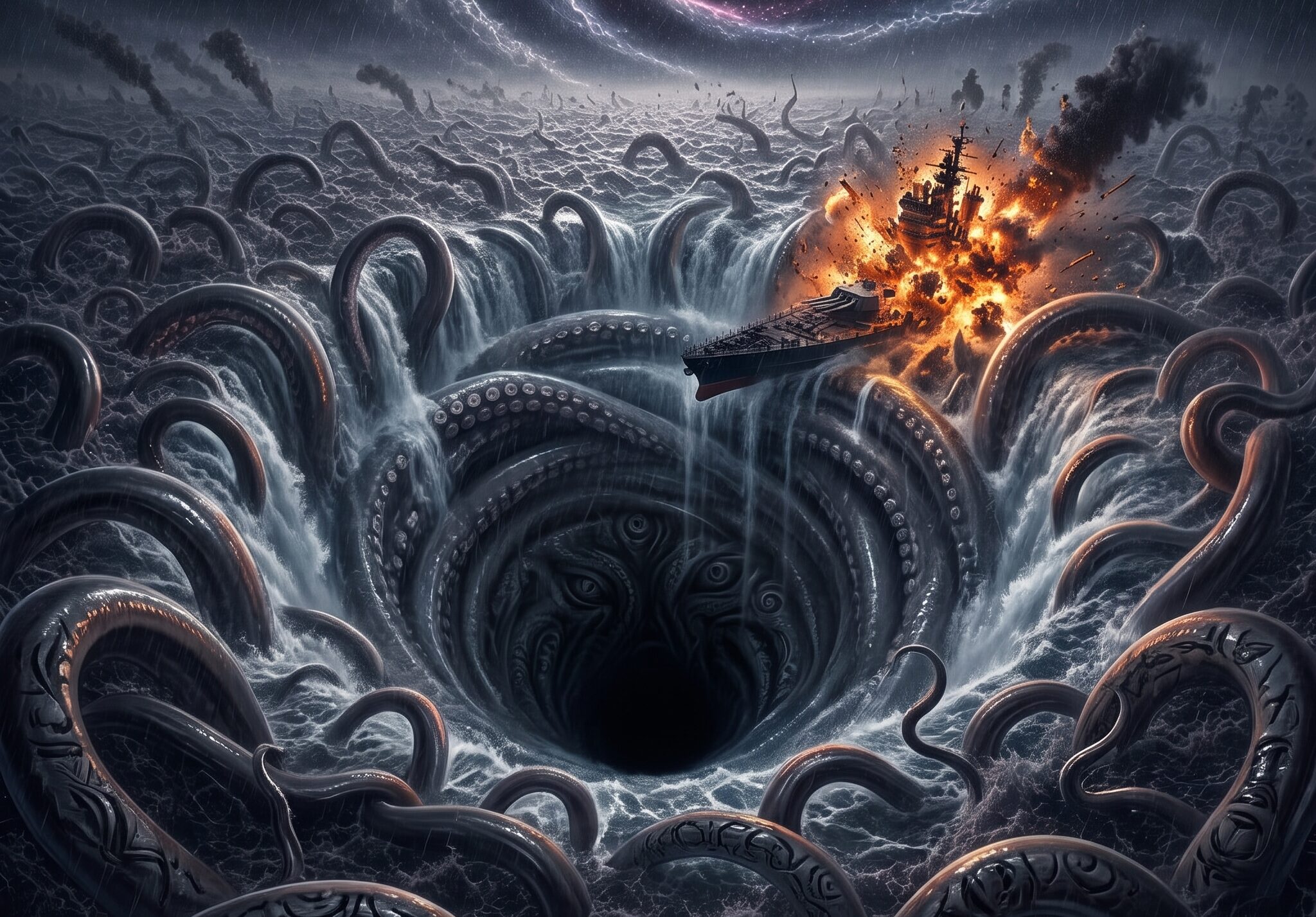
The Zaleeshee is no longer just a channel of commerce or a mirror for the fading sky; it has become a widening fracture where the lonely cold of the salt-spray meets the creeping rot of an awakening god. As the ancient treaties dissolve like silt in a storm, the sovereigns of the shallows and the deep must face a stark, common reality: when the Pact fails entirely, neither familial ink nor bone armor will insulate them from the tide of flesh and rot screaming over their shores.
For the people of the coast, survival will not be found by cowering behind weathered timber or pleading with silent sages, but by seizing the reins of the oncoming chaos and driving a unified blade straight through the heart of the dark.



Leave a Reply